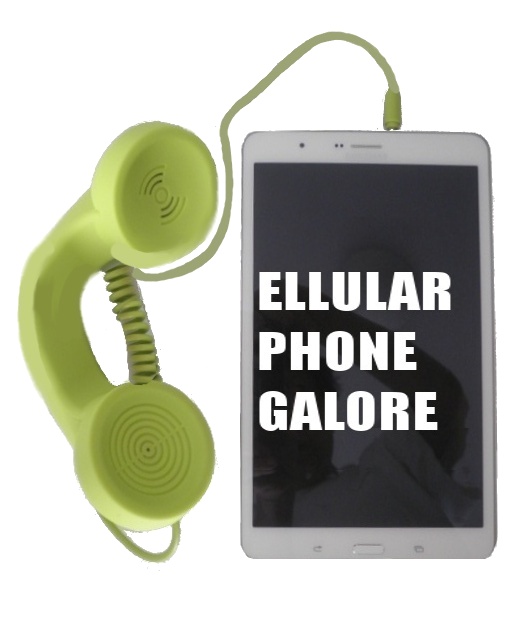
Cellular Phone Galore
1991 February Predecated Visionary GSM
Sept 2026, 37 Years BEFORE the industry global implementation
Sept 2026, 37 Years BEFORE the industry global implementation
| 1991 | 2026 |
|---|---|
|
"If you're on the mountain top or beside a waterfall you can now call & your staff can't ignore" |
Starlink T-Satellite: phone auto-connects to satellite in dead zones. Apple iPhone 14+: SOS + Messages via satellite. Iridium 9555: full voice from the South Pole. The "IF" is now a given. |
| 1991 | 2026 |
|---|---|
| "'tis Motorola's intention for all" | Motorola demonstrated the world's first GSM (Global System for Mobile Communications) working-prototype cellular system and phones in Hanover, Germany, in April 1991 |
| "by 1996, a network of 77 satellites" | Derived from the periodic table. heavy metal, group 9 Iridium = element 77 → 77 electrons → 77 satellites. Original design spec was 77 (72 operational + spares). Reduced to 66 in 1997 to save costs. The number was in the name before a single satellite was built. |
|
"can relay all phone calls to any spot on this planet" |
Actual launch: November 1998. Two years later than the estimate. Within the margin of a 1991 projection for a system not yet in engineering. |
| 1991 | 2026 |
|---|---|
|
"named Iridium the element whose nucleus is orbited by 77 electrons support all these calls |
Exact. The system is literally called Iridium. Element 77. The naming was chosen for this reason. The name, the element, and the electron count all correct 7 years before launch. |
| 1991 | 2026 |
"and how much will it costs to make a call? between US $1 to $3 for merely a one-minute call" |
Iridium 2026: $1.00/min (15-min plan). Inmarsat: ~$1.50–$2.50/min. The $1–$3 range is exactly the 2026 price for dedicated sat-phones. (Direct-to-cell came in at $0 — a tier she didn't need to name.) |
|---|
| 1991 | 2026 |
|---|---|
|
"as compared to the US $0.50 for a one-minute call within the urban system where calls are linked to radio towers" |
Ratio preserved. Urban mobile in 2026: included in unlimited plans (effectively $0/min marginal). Satellite: $1/min. The 2:1 to 6:1 ratio she described still holds. "Radio towers" = 5G/LTE cell towers. |
| 1991 | 2026 |
|---|---|
|
"is that all? don't forget the investment will cost an estimated US 2.3 billion dollars or more" |
Actual Iridium build cost: ~$4.9B. The "or more" saved it. In 1998, it incurred an additional 1B In 2026, total satellite-telecom capital deployed across five competing constellations: $25B+ (Amazon/Globalstar $11.6B, Rocket Lab/Iridium ~$8B, Starlink D2C $650M+ hardware). |
| 1991 | 2026 |
|---|---|
|
"what are all these for? for research, for progress for improving communication links & information explosions for peace or for war?" |
All four, simultaneously. Research: 1.5M+ IoT devices (buoys, glaciometers, wildlife trackers). Progress: 16M+ Starlink D2C users. Information explosion: 650-satellite data layer. Peace or war: US DoD EMSS contract; Kyivstar uses Starlink D2C in an active war zone. Both, at the same time, on the same satellites. |
| 1991 | 2026 |
|---|---|
|
'Tis truly the first global cellular phone galore" |
2.627M Iridium subscribers + 16M+ Starlink D2C unique users + 200M+ iPhone 14+ units with satellite SOS. "Galore" is no longer a prediction — it's a subscription market. |
|
"Perhaps it might be or become an unprecedented telecommunication war!" |
Literal. Five-way conflict in 2026: 🛰 Starlink (SpaceX): 650+ D2C sats, T-Mobile, 22 countries 🛰 Iridium → Rocket Lab: 66 sats, pole-to-pole, military + IoT 🛰 Globalstar → Amazon: 24 sats, Apple, $11.6B acquisition 🛰 AST SpaceMobile: beta with AT&T, Verizon, Vodafone 🛰 Inmarsat → Viasat merger: GEO, maritime, aviation The most accurate single line in the poem. Not a metaphor — a competitive, regulatory, and geopolitical conflict over who owns the sky-to-phone layer. |
🛰 SpaceX (Starlink)
🛰 Amazon (Globalstar)
🛰 Rocket Lab (Iridium)
🛰 AST SpaceMobile
🛰 Viasat (Inmarsat)
with a precision
NO 1991 industry analyst achieved
32 lines, 37 years ago
This poem was written BEFORE Internet Web browser era
ie there was NO reference to Google, Wikipedia etc & Radiolinja
Radiolinja is the first GSM operator that offers the first GSM operator on March 27, 1991
It was opened for commercial use July 1, 1991
Iridium Communication Services, Iridium SSC was first launched on Nov 1,1998
Iridium Communication was founded in 2001
Lin Hsin Hsin
February 1, 1991
First published on p54, 55 from time to time , 1991
ISBN13: 978-981-00-2705-2 (paper)
ISBN10: 981-00-2705-2 (paper)